Development / Tool Comparison
Framer for Developers

How developers extend Framer with React code components, overrides, APIs and custom functionality — and where the platform's limits are.
Audience
Topics
Framer for Developers
Framer isn't just for designers anymore. Developers can extend it in ways that feel familiar: React components, typed props, API calls and a programmatic interface for publishing. If your team works with React, APIs or internal tools, Framer can take the marketing site off your plate while still giving you control where it matters.
This guide is written for engineers and technical leads evaluating Framer. It maps the extension points, explains how they fit together, and is clear about where the platform's limits are. We reference Framer's developer documentation throughout, so check it for the current details.
Why developers should care
Marketing sites are a classic engineering distraction. Every hero copy change, new landing page or pricing tweak becomes a ticket. Framer moves most of that work to the people who own the content, and gives you:
A visual canvas where designers and marketers handle layout and content.
Code components for custom functionality and UI.
Fetch, plugins and custom scripts for data and integrations.
A Server API for automating publishing.
The result: you spend engineering time where it has real impact, instead of rebuilding marketing scaffolding.
The extension surface at a glance
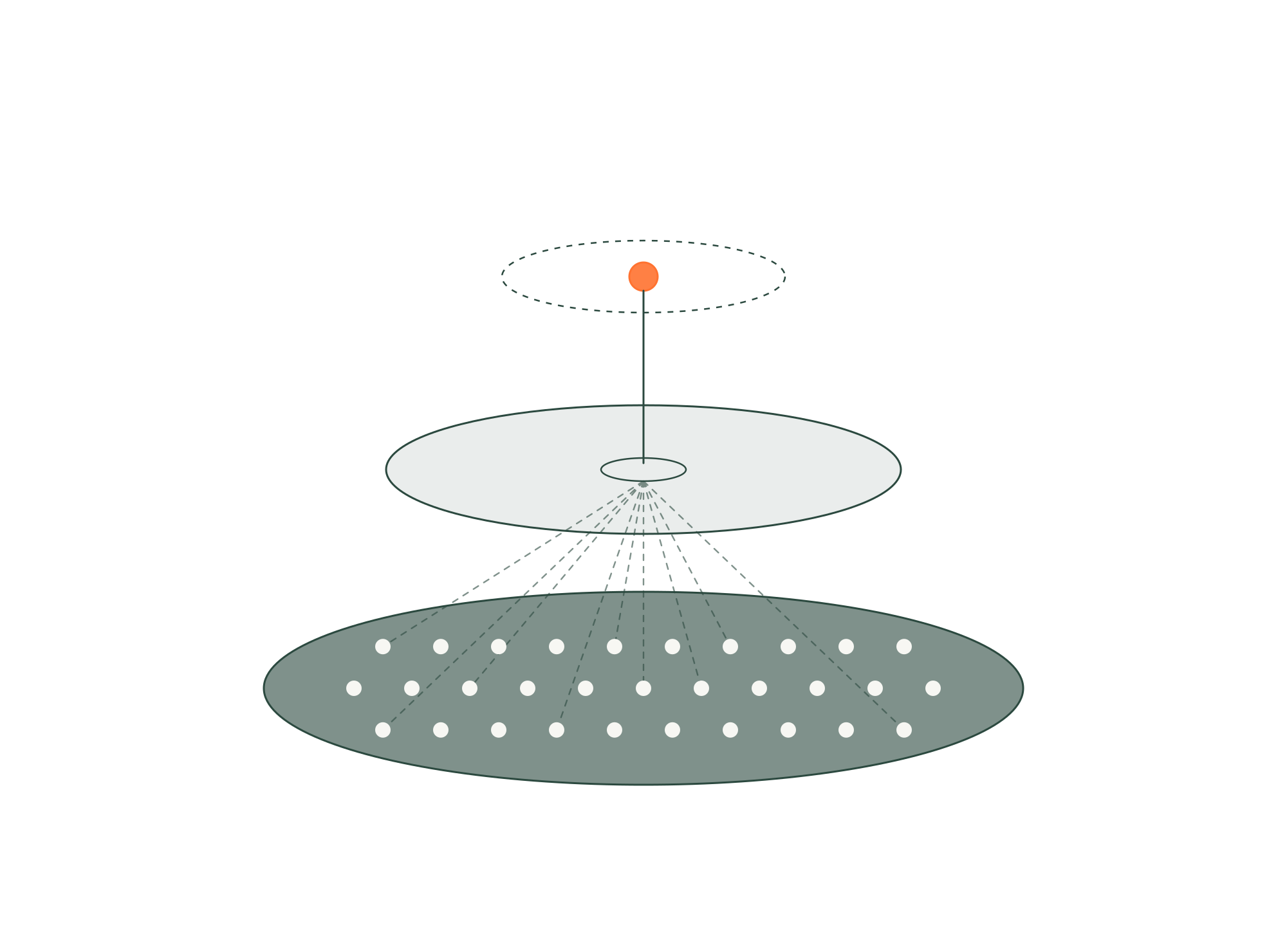
Framer gives developers 6 main ways in. Knowing which one fits a problem saves a lot of time.
Code components. Custom React components that render on the canvas, in preview and on the published site.
Property controls. The bridge between your code and the visual editor. They define which props a designer can change in the UI.
Code overrides. Higher-order components that modify existing layers.
Fetch. No-code data binding to API endpoints.
Plugins. Small apps that run inside the Framer editor and can work with the canvas and the CMS.
Server API. A Node package for working with a project from outside Framer, including publishing.
Using React inside Framer
Code components are standard React. Framer's docs require React 18-compatible code. You create a code file in the editor, export a component, and it appears in the assets panel like any other component.
Code components let you:
Build fully custom UI blocks. Interactive demos, calculators, filters, configurators, data visualizations.
Connect to APIs, internal data or microservices. Fetch data in the component and render it however you need.
Expose props so non-technical teammates can configure them visually. With property controls, a designer can change a label, pick a color from the site's styles or swap an image without opening the code.
Property controls are where most of the quality lives. A component with clear, well-named controls and sensible defaults gets reused across the site. A component with 25 cryptic props gets copied, forked and broken.
Components can also be shared through a versioned URL, which makes it possible to build a small internal library of primitives.
Overrides: small, targeted changes
Code overrides wrap an existing layer and change its props or behavior. Typical uses: appending UTM parameters to signup links, toggling state between two components, or reacting to scroll.
2 things to know. Overrides are only active in preview and on the published site, not on the canvas, so designers won't see the effect while editing. And Framer recommends checking built-in features first, since effects, component variants and Fetch now cover many cases that used to need an override.
Fetch, APIs and live data
Fetch lets designers bind text, images and other values to API responses without writing code. For developers, the job is building endpoints that work well with it.
The response must be a JSON object. Basic types such as strings, numbers and booleans map to layer properties.
Arrays can't be iterated in the Fetch UI, so shape the response for the page rather than returning raw data.
For APIs that need authentication or secrets, put a small backend in between. Framer's docs point to function platforms like Cloudflare Workers or Val Town.
Framer's own guidance is worth repeating: if content can be typed in or kept in the CMS, do that, because static content is better optimized for SEO. Use Fetch for genuinely dynamic data such as live status, inventory or pricing that changes often.
Plugins and the Server API
Plugins run inside the editor and can read and write the CMS. This is the right tool for syncing content from another system: a product catalog, a changelog from your repo, a list of integrations from an internal database.
The Server API (installed with npm as framer-api) lets you work with a project from your own scripts, using a project-bound API key. It can list changes since the last publish, publish a preview and promote it to production. That opens up workflows like publishing from CI after a content sync, or scheduled updates.
Framer also documents connecting external coding agents to update projects. Treat this like any automated write access: scope it, review it and keep a human in the loop for production.
Dev-friendly workflows
Developers can:
Keep the canonical source of complex components in your own repository, with review and tests, and treat Framer as the place they're deployed.
Create a library of reusable primitives for the design team, with property controls that match your design tokens.
Collaborate with designers without fighting over layout details: you own behavior, they own placement and styling.
Document every code component with what it does, its controls and who owns it.
Where the limits are
Framer is a website platform, not an application framework. Plan around these:
No backend of your own. Framer hosts the site, but your server logic, secrets and authentication live elsewhere.
Not your product's app. Logged-in experiences, dashboards and complex state belong in your product stack.
Client-side data and SEO. Content that only appears after an API call is a weaker choice for search than static or CMS content.
Custom code is yours to maintain. Every code component is a small dependency. Keep them few, documented and owned.
Our point of view
For developers, Framer isn't a replacement for your core stack. It's a way to hand off marketing surfaces while keeping full control where it matters. Build a handful of well-designed components, give your designers good controls, automate what's repetitive, and leave the rest to the people who own the message. That combination is especially useful for lean product and platform teams.
Allsite builds brands and Framer websites for venture-backed tech companies — designed to perform, and built for the teams that have to run them.